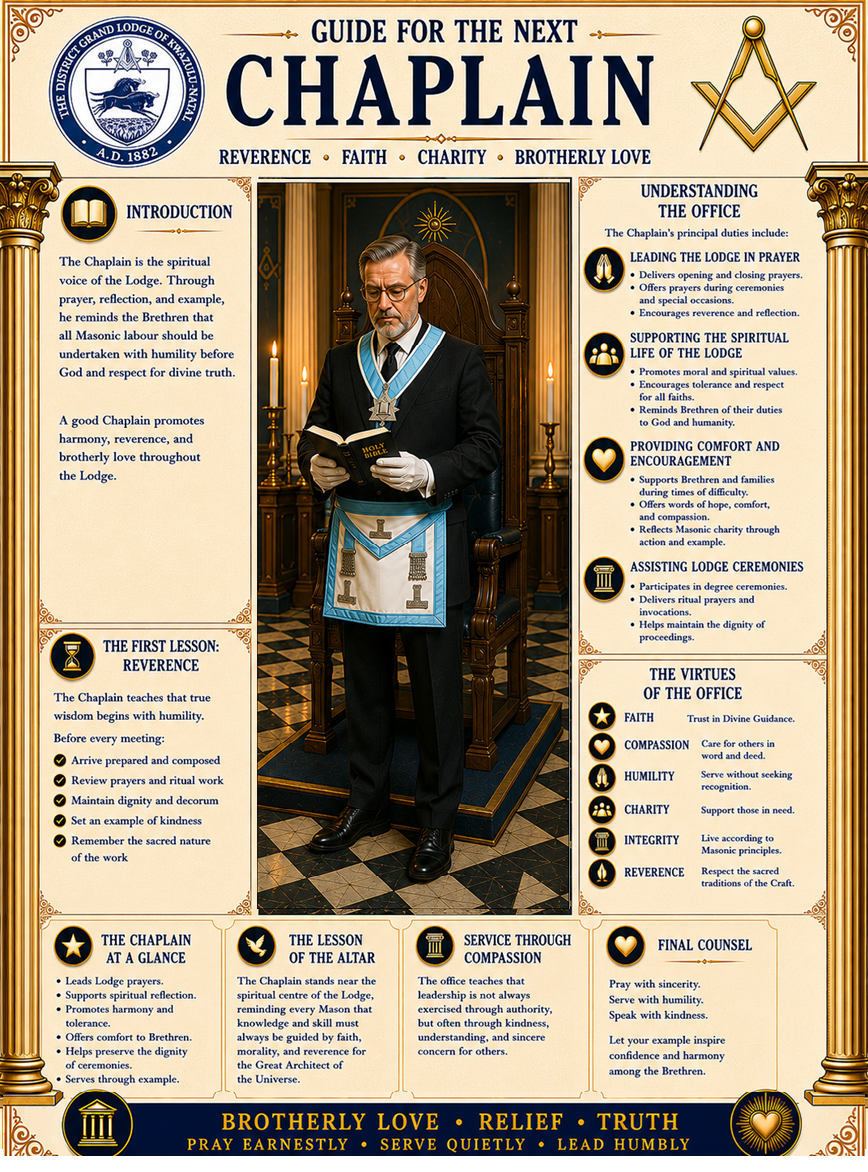
The Guide for the Would-Be Chaplain is written for the Brother who may one day serve as the spiritual voice of the Lodge. The office of Chaplain holds a quiet but deeply important place in Freemasonry. While some offices lead through administration, ritual, or direction, the Chaplain serves through reverence, compassion, and sincere prayer.
His duty calls for humility, kindness, faith, and dignity. He reminds the Brethren that all Masonic labour should begin with trust in the Great Architect of the Universe, continue with charity, and end with gratitude.
Therefore, a Brother who hopes to become Chaplain should not see the office as a minor appointment. Rather, he should understand it as a sacred opportunity to serve the Lodge, comfort the Brethren, and help preserve the spiritual tone of Freemasonry.
Guide for the Would-Be Chaplain: Understanding the Purpose of the Office
The Chaplain represents the spiritual conscience of the Lodge. His role is not to divide, preach, or promote personal opinion.
Instead, he should unite the Brethren in reverence, reflection, and brotherly love. He offers prayers at proper times, supports the dignity of Lodge proceedings, and reminds the Brethren that Masonic work rests upon faith, morality, and service.
For this reason, the Chaplain must approach his office with humility. His words should lift the Lodge, not draw attention to himself.
A good Chaplain helps create an atmosphere where every Brother can pause, reflect, and remember his duty to God, his neighbour, and himself.
Cultivating a Reverent Spirit
A Chaplain should first cultivate reverence within his own heart. Before he can guide others in prayer or reflection, he must develop sincerity, calmness, and spiritual discipline in his own life.
This does not require loudness or display. In fact, the strength of a Chaplain often appears in quiet devotion, steady conduct, and genuine humility.
He should maintain a habit of prayer and reflection. In addition, he should practise compassion, patience, and kindness in his dealings with the Brethren.
When a Chaplain lives with reverence, his presence strengthens the Lodge even before he speaks.
Learning the Ritual Thoroughly
The Chaplain must prepare carefully for his duties. His prayers, responses, and ritual work should flow with confidence and dignity.
Therefore, he should study the prayers used in the degrees, understand his part in opening and closing the Lodge, and know the correct procedure for memorial or funeral services when required.
Preparation shows respect. It also helps the Chaplain serve without hesitation or confusion.
Furthermore, when he delivers prayers clearly, reverently, and thoughtfully, he helps the Brethren enter more fully into the meaning of the ceremony.
Speaking From the Heart
When called upon to offer prayer or reflection, the Chaplain should speak sincerely and simply. He does not need complicated language to move the hearts of the Brethren.
Often, the simplest prayers carry the greatest meaning. However, he should avoid sectarian expressions that may exclude or divide.
Freemasonry brings men of different backgrounds together under the fatherhood of God and the brotherhood of man. For this reason, the Chaplain should use words that unite rather than separate.
He should focus on Masonic values such as faith, charity, humility, gratitude, peace, and truth.
Being a Source of Comfort
The care of the Chaplain should extend beyond the Lodge room. He should visit the sick, remember distressed Brethren, comfort widows and families, and offer support during times of sorrow or bereavement.
In addition, he should remain alert to those who may suffer quietly. Some Brethren may not ask for help. Nevertheless, they may still need a kind word, a visit, or a simple message of encouragement.
A faithful Chaplain brings comfort not only through formal prayers, but also through personal kindness.
For this reason, his actions should show Masonic charity in word and deed.
Leading by Example
Brethren will remember the character of the Chaplain more than his words. Therefore, he should lead by example in his conduct, speech, and attitude.
He should show honesty, gentleness, patience, and respect in all circumstances. In addition, he should avoid gossip, harsh judgment, and unnecessary criticism.
A Chaplain who speaks of peace must also practise peace. His daily conduct should reinforce the lessons taught at the altar.
When the Chaplain leads by example, he gives strength to his prayers and credibility to his office.
Studying Sacred and Masonic Literature
A Chaplain should continue to grow in wisdom and understanding. He should study the Volume of the Sacred Law according to his faith.
In addition, he should read Masonic writings that encourage moral reflection, brotherly love, and spiritual growth.
This study does not serve pride or display. Rather, it helps the Chaplain speak with greater depth, sincerity, and understanding.
He may also review prayers, funeral services, charges, and suitable readings. By doing so, he prepares himself to serve the Lodge with confidence and care.
Remembering the Symbolic Role
The Chaplain stands near the altar, one of the most sacred and symbolic places in the Lodge. This position reminds the Brethren that Freemasonry rests upon faith in God, moral responsibility, and the pursuit of truth.
Therefore, the Chaplain should never treat his office casually. His words, manner, and conduct should reflect the dignity of the altar and the solemnity of Masonic labour.
He should encourage humility, gratitude, and dependence on divine guidance.
In this way, he helps every Brother remember that Masonry is not only a system of fellowship. It is also a path of moral and spiritual improvement.
Serving With Humility
A Brother who desires to become Chaplain should first become a man of reverence, compassion, and integrity. He should learn the ritual well. However, he must also remember that the office requires more than memorised words.
The influence of a Chaplain comes from the sincerity of his faith, the kindness of his heart, and the example of his life.
Therefore, he should pray earnestly, serve quietly, comfort generously, and lead humbly.
A humble Chaplain does not seek attention. Instead, he seeks to bring peace, comfort, and dignity to the Lodge.
Conclusion
The Chaplain plays a vital role in the spiritual life of the Lodge. He offers prayer, encourages reflection, supports the Brethren, comforts those in need, and reminds the Lodge of its dependence on the Great Architect of the Universe.
Yet his greatest work may not always happen in public. Often, it takes place in quiet moments of kindness, encouragement, and brotherly care.
A worthy Chaplain does not seek attention. He seeks to serve.
Through reverence, faith, charity, brotherly love, and truth, he helps strengthen the Lodge and uplift the hearts of the Brethren.
This is the true lesson of the Guide for the Would-Be Chaplain: pray with sincerity, serve with humility, and comfort with brotherly love.
Excellent and insightful.
Thank you.