What is Freemasonry
Freemasonry is one of the world’s oldest and most respected fraternal societies. Under the United Grand Lodge of England (UGLE), it is defined as a system of moral and personal development, where individuals strive to improve themselves and contribute positively to society.
It is not a religion, but it requires its members to believe in a Supreme Being. Freemasonry encourages each individual to practise their own faith while respecting the beliefs of others.
At its core, Freemasonry promotes values such as integrity, friendship, respect, and charity — forming the foundation of a lifelong journey of personal growth.
Freemasonry Explained
Freemasonry is often described as a journey of self-improvement — not through instruction alone, but through reflection, symbolism, and shared experience. It encourages individuals to examine their lives, refine their character, and act with integrity.
Rooted in Enlightenment traditions, it promotes reason, tolerance, and the pursuit of knowledge. Men from different backgrounds meet as equals, united by a common goal: to become better individuals and contribute positively to society.
Freemasonry focuses on personal development rather than political or institutional influence, using symbolic stonemasonry as a metaphor for growth.
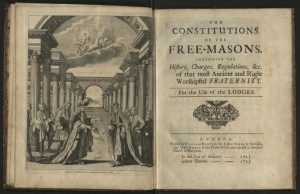
Published in 1723, The Anderson Constitutions is the foundational document of modern Speculative Freemasonry.
Origins of Freemasonry
Freemasonry evolved from the medieval stonemasons who built Europe’s great cathedrals, transitioning from operative to speculative traditions.
The formation of the first Grand Lodge in London in 1717 marked the beginning of modern Freemasonry.
During the Enlightenment, it became a place where ideas were shared freely and men met as equals.
Freemasonry and Society
Freemasonry has influenced philosophy, literature, and music throughout history, with ideas reflected in works such as Mozart’s The Magic Flute.
In today’s world, it offers something increasingly rare — genuine human connection, mentorship, and a strong sense of belonging.
Brotherhood
Men meet as equals.
Charity (Relief)
Supporting those in need.
Truth & Knowledge
Encouraging intellectual and moral growth
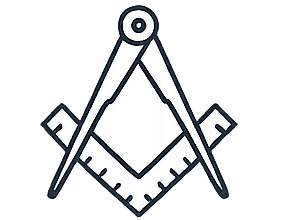
Integrity
Acting honourably in all aspects of life.
Symbolism and Meaning
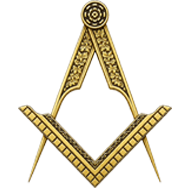
Central to Freemasonry is its use of symbolism. The Square and Compasses, the Temple of Solomon, and the idea of transforming the “rough ashlar” into a “perfect ashlar” represent personal development and self-mastery.
These symbols are teaching tools — designed to encourage reflection, discussion, and deeper understanding.
English Freemasonry in South Africa
Freemasonry was introduced to South Africa in the late 18th century and remains a respected institution today.
It operates under recognised constitutions, including the United Grand Lodge of England, with the District Grand Lodge of KwaZulu-Natal forming part of the English Constitution.
Freemasonry continues to promote moral values, support charitable causes, and build strong communities across cultural and social boundaries.
What Do Freemasons Do?
- Participate in structured ceremonies
- Learn moral lessons through symbolism
- Build lasting friendships
- Support charitable initiatives
Freemasonry is described as a “beautiful system of morality, veiled in allegory and illustrated by symbols.”
Interested in Learning More?
If you would like to learn more about Freemasonry in KwaZulu-Natal, you are welcome to contact us or begin a membership enquiry.